CBCT to guide · Your kit · 24-48h
Surgical guide design service for U.S. dental labs.
Send a CBCT and an intraoral scan; receive a print-ready surgical guide matched to your implant kit in 24–48 hours, designed by one person, invoiced only after you approve it.
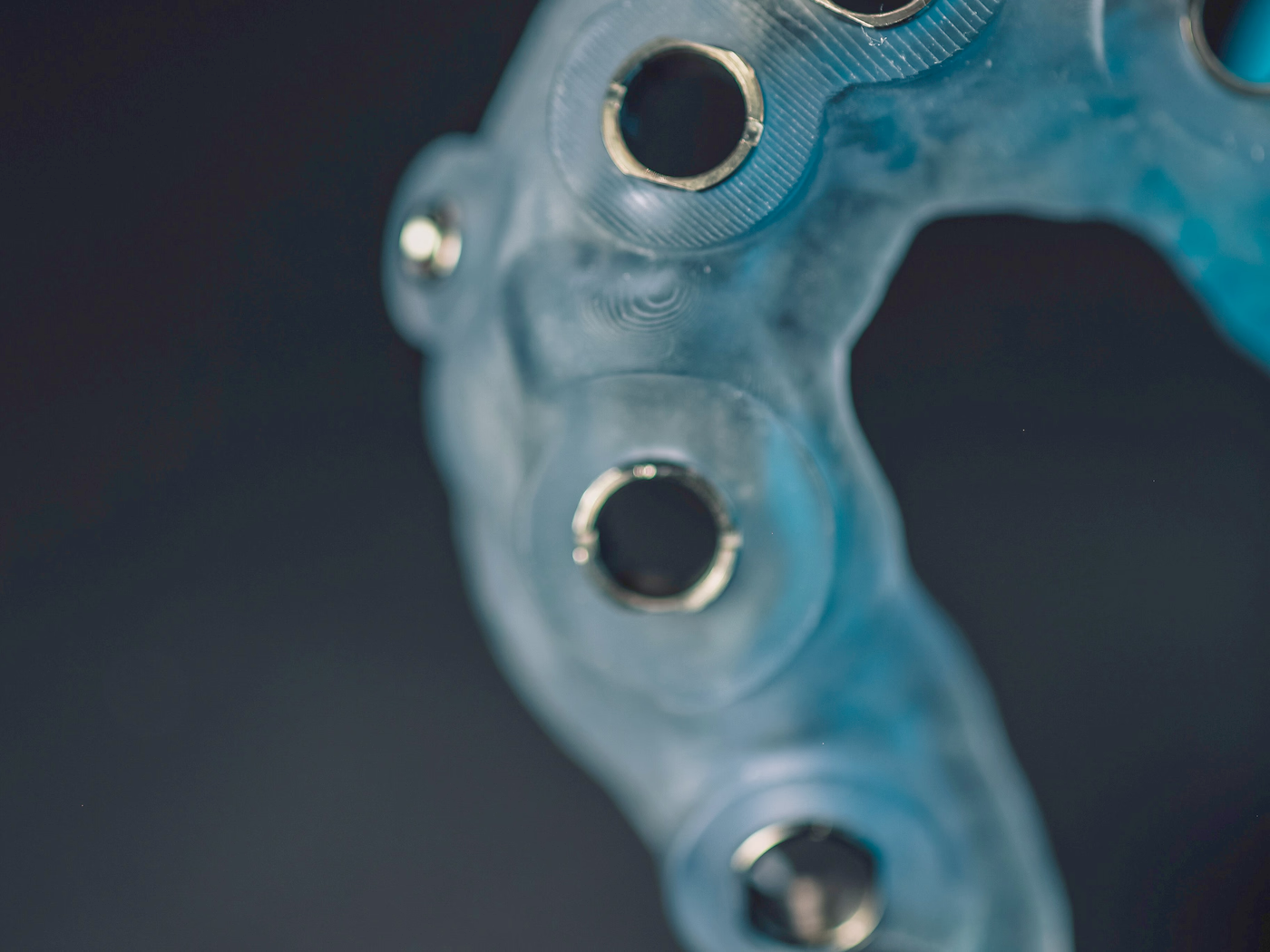
What a U.S. lab gets back
You send
- CBCT (DICOM) of the arch
- Intraoral scan (STL); a scan of the current denture for edentulous cases
- Implant system, diameter/length, guided kit
- The prosthetic goal: crown position or the planned tooth setup
You get back
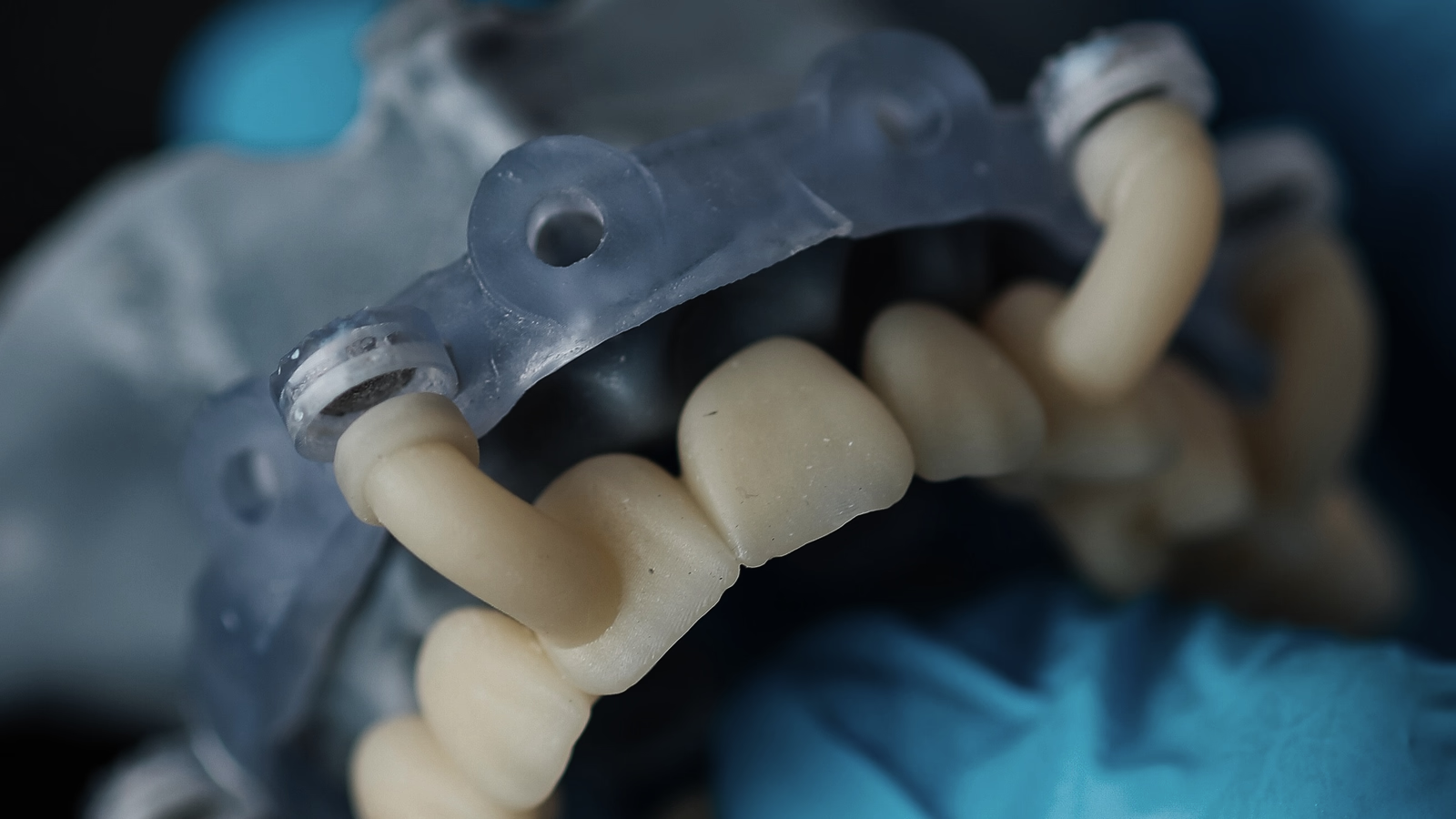
- Print-ready guide STL — tooth-, mucosa- or bone-supported, with planned anchor-pin channels and a bite index on the mucosa- and bone-supported ones
- Implant positions planned restoratively, from the final tooth back
- Sleeve positions and drill offsets matched to your kit
- A planning report your surgeon can read before the appointment
Why send it here
One person plans your guide
Nicolás Petersen plans the implant positions, designs the guide and checks the seating surface himself. The same hands stay on the case from the CBCT to the printed guide.
Answers on your clock
A question about a sleeve position or a drill offset is answered while your lab is still open. Aruba runs on Atlantic time: the same clock as U.S. Eastern during daylight time, one hour ahead in winter.
Approve before you are billed
The guide is invoiced only after you approve the implant positions, the sleeve placement and the seating surface. Minor revisions are unlimited, and if the stated turnaround is missed the case is free.
Built on your implant kit
The guide is designed around the implant system and guided kit you already use, whatever the brand. Sleeve positions and drill offsets follow that kit, and the file is exported for your printer.
Pricing
Every price is design only. You review the plan and the design before you pay: approval is on the report and the screenshots, and the production files are released when the invoice is settled. Revisions inside the approved plan are included. The turnaround clock starts when I confirm your files are complete and stops while I am waiting on an answer from you; if I miss the turnaround I stated when I accepted the case, that case is free.
How it works
Send the case
Upload DICOM and STL through the encrypted link, name the implant system and kit, add the prosthetic goal.
Approve the plan
You get the implant positions and the guide design to review. Sleeve position, offset or seating surface not right? It is revised until it is.
Print and place
The final STL is exported for your printer and resin. The invoice arrives after your approval, not before.
Questions U.S. labs ask, answered
Do you work with our implant system?
Nearly all of the major lines and their guided kits, through the exoplan and Blue Sky Plan libraries. If the kit is sleeved, the sleeve seat and the H-offset come from that kit's published protocol; if it is keyless, the guide cylinder diameter and depth come from the same document. Tell me the system, the kit and the drill sequence with the case. If your kit is not in the library I say so before I start, and I do not design a guided case around a generic sleeve, because that offset is what sets the depth.
Which planning software do you use?
Implant positions and the guide in exoplan or Blue Sky Plan, whichever suits the case; the prosthetic side in exocad. Nicolás Petersen is certified in exocad and exoplan and the certificates are available on request. Files are exported in standard formats your printer and mill already read.
What if the guide does not seat?
Send a photo of it on the model and I re-check the seating surface, the block-out and the sleeve positions against the original scan, and send a corrected file at no charge. Seating also depends on scan quality, resin, print orientation and post-cure on your side, so we look at both. If the scan cannot support a guide that seats, I tell you before I design it, not after.
Is this a U.S. company?
No. NB Digital Dentistry is Nicolás Petersen, a digital dentistry designer based in Aruba, working remotely for laboratories and clinics in the United States, Canada and the Caribbean. Aruba is on Atlantic time, so the working day overlaps the U.S. Eastern business day.
How do files travel, and what about patient data?
You receive an encrypted upload link. Patient files never travel as email attachments and never over WhatsApp. Send the CBCT (DICOM) and intraoral scans (STL) with no patient identifiers in the file names; the design work needs none.
Who carries the regulatory responsibility, and who owns the plan?
You do, on both counts. The deliverable is a design file: printing, materials, sterilisation and every regulatory obligation stay with your laboratory or clinic, as they would for a design your own technician produced. The treating clinician prescribes the case, approves every implant position on their own screen and is solely responsible for the decision to place. I design to that prescription and tell you about anything in the data I would not drill on.
You approve the design before you pay.
The first case is free — one implant plan and guide of up to two implants for a clinic, or three restorative units for a laboratory, one per practice. Judge the files on your own equipment first.
Send your first case free